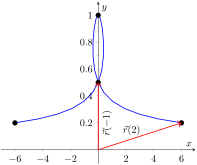
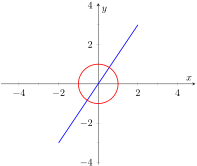
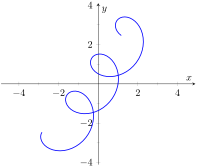
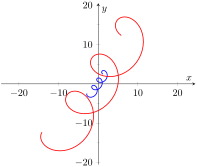
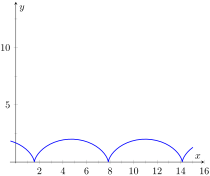
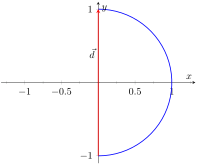
The image shows the cycloid which comes from tracking a point
\(p\) on a rolling circle of radius
\(1\) on a flat surface. The point
\(p\) is initially at the top of the circle of radius
\(1\text{.}\) Once the circle rolls, the point
\(p\) is tracked to create a graph of a cycloid. The graph coming from tracking the point
\(p\) first begins to decrease, until the point
\(p\) is at the bottom of the circle, at which point the point
\(p\) touches the surface the ball is rolling on. After this point, the graph begins to increase. The circle continues to roll, with the point
\(p\) once again becoming the top of the circle, after which the graph begins to decrease. The circle continues rolling, with the point
\(p\) becoming the lowest point on the circle two more times, after which the graph stops. Between the starting point and the point at which
\(p\) is at the bottom of the circle, the graph resembles a slightly stretched quarter of a circle. The part of the graph that comes from the remaining two full revolutions of the circle resembles two horizontally stretched semi-circles.